
Joints & Details
Focusing on developing accuracy and confidence in both hand-cut and machine-cut joinery. Beginning with simple lap joints and progressing to dovetail joints in timbers of varying densities, I gained a practical understanding of how different materials influence the approach and precision required.
In the workshop, I produced joints using a mortise and tenon machine, spindle moulder and bandsaw, building confidence in safe machine operation while maintaining accuracy and consistency.
The spindle moulder was also used to produce a clean chamfer on the tabletop, while the router table was used to machine a decorative ovolo profile on the footstool. These details reinforced the importance of precision, surface finish and thoughtful craftsmanship in furniture making.
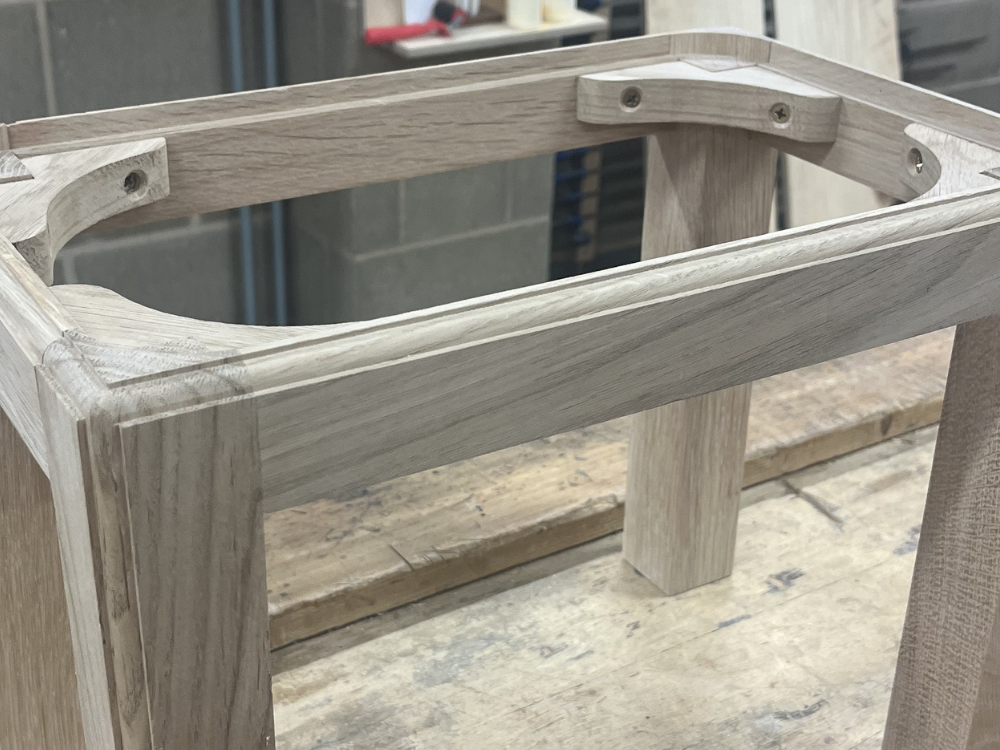
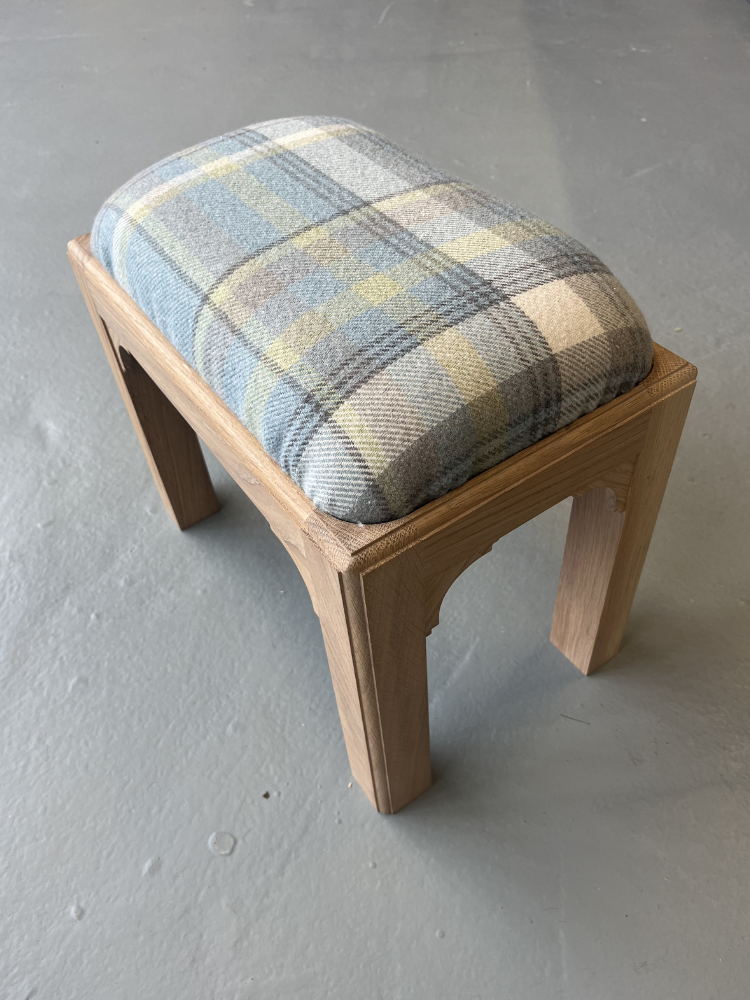
Oak Foot Stool
This oak footstool was carefully planned to maximise the use of a single sawn board, with the components nested to make the most efficient use of the timber while maintaining a consistent grain throughout the piece.
The frame is constructed using haunched mortise and tenon joints, with bevelled rail ends that add a subtle design detail while showcasing precise joinery.
The legs were machined on the router table to create a decorative ovolo profile, before the inside edges were rounded over with a hand router to provide a smooth transition for the upholstered cushion.
I also designed and made the decorative corner brackets and support brackets, shaping them on the bandsaw before refining the profiles on the sanding machines. These details add both visual interest and structural support, reflecting the balance between function and craftsmanship that underpins the design.
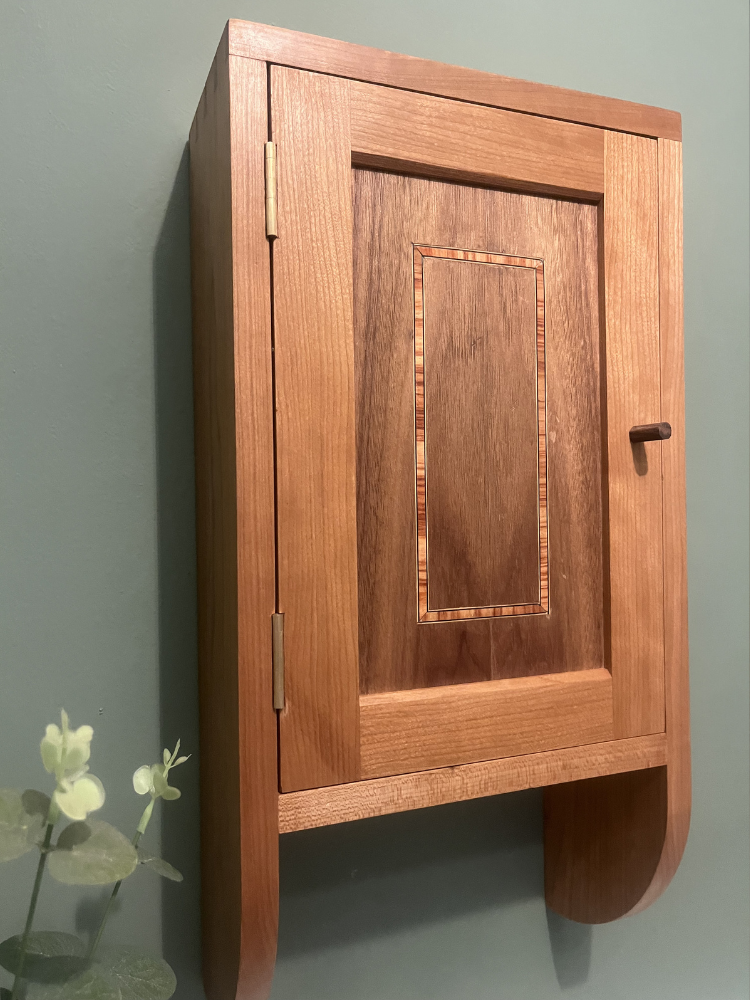
Cherry Wall Unit
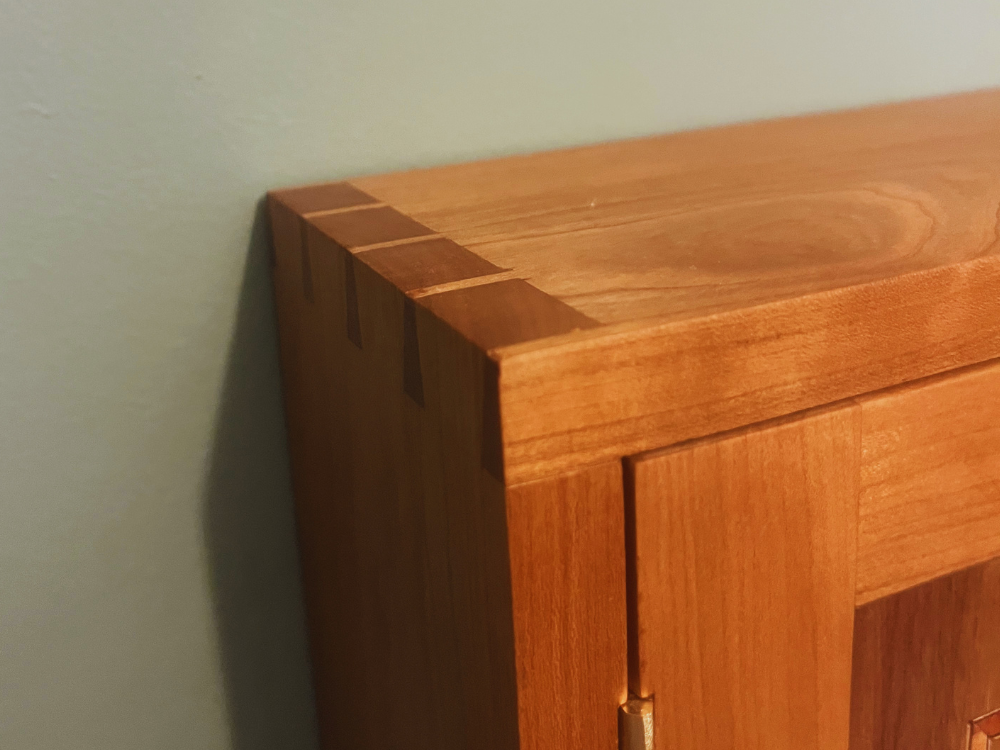
This wall unit is constructed in cherry, with a dovetailed top and a rebated base set between gently curved side panels. The design combines traditional cabinet-making techniques with carefully considered contemporary detailing.
The door frame is assembled using hand-cut haunched mortise and tenon joints, with grooves machined on the spindle moulder to house a walnut-veneered panel featuring a decorative parquetry inlay.
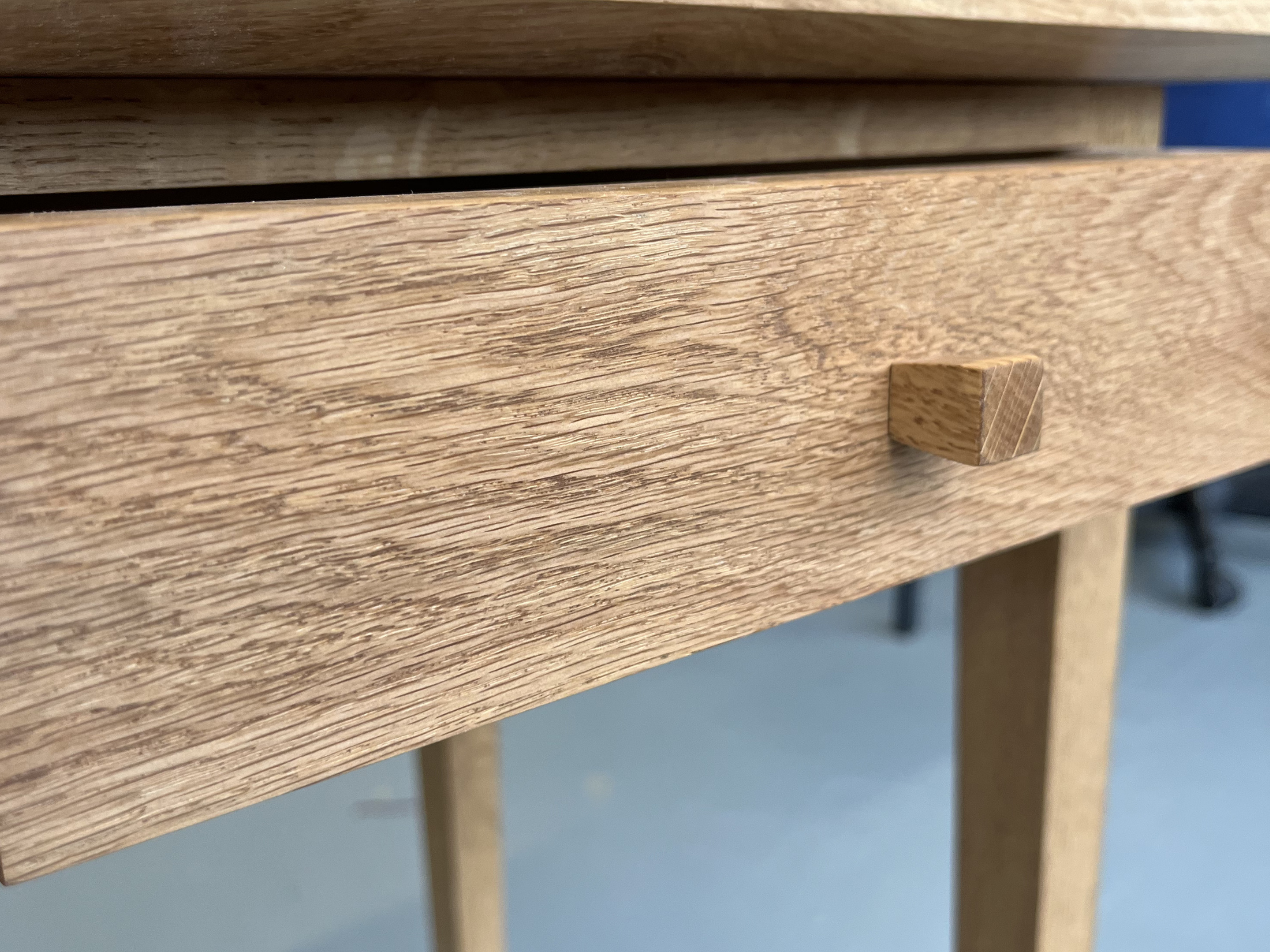
The handle is crafted from a hand-planed section of walnut, providing a simple contrast to the cherry cabinet while echoing the walnut used in the door panel.
Inside, an adjustable shelf is supported by a series of height positions drilled with the drill press, allowing the cabinet to be adapted to different storage requirements. Every detail was designed to balance practicality with refined craftsmanship.
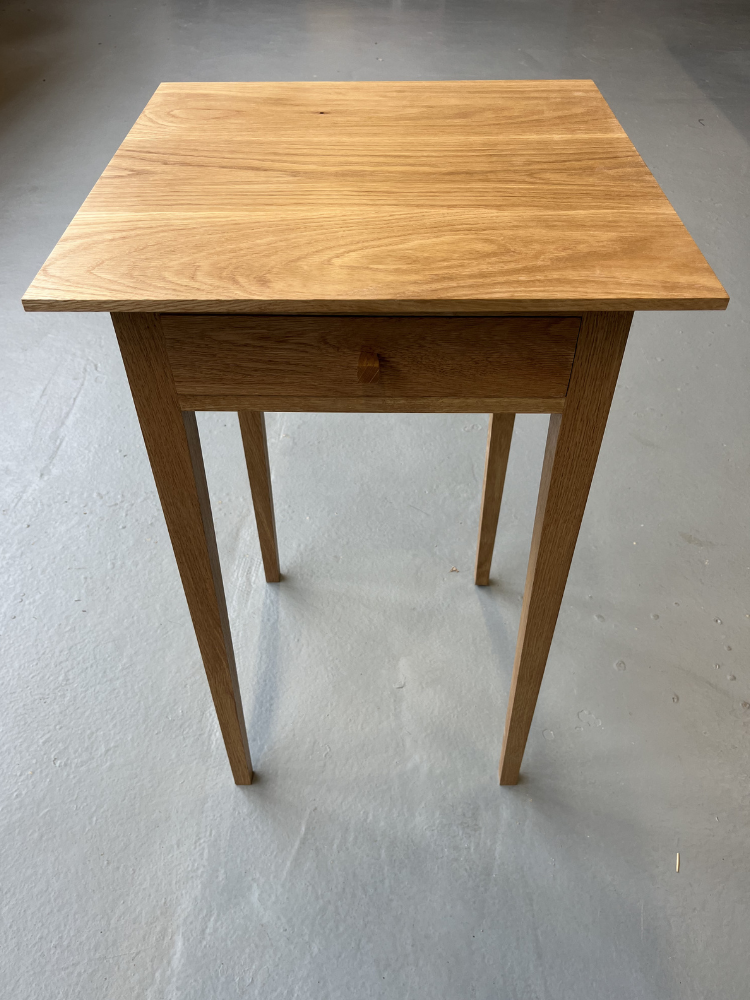
Oak Shaker Side Table
This Shaker-inspired side table was crafted from a carefully selected piece of rough-sawn oak, with the components nested to maximise the use of the timber while maintaining a consistent grain throughout the piece.
The tabletop is formed from six boards, edge-jointed with biscuits before being glued, planed and sanded to achieve a flat, seamless surface. A chamfer, machined on the spindle moulder, provides a clean, understated detail that reflects the simplicity of Shaker design.
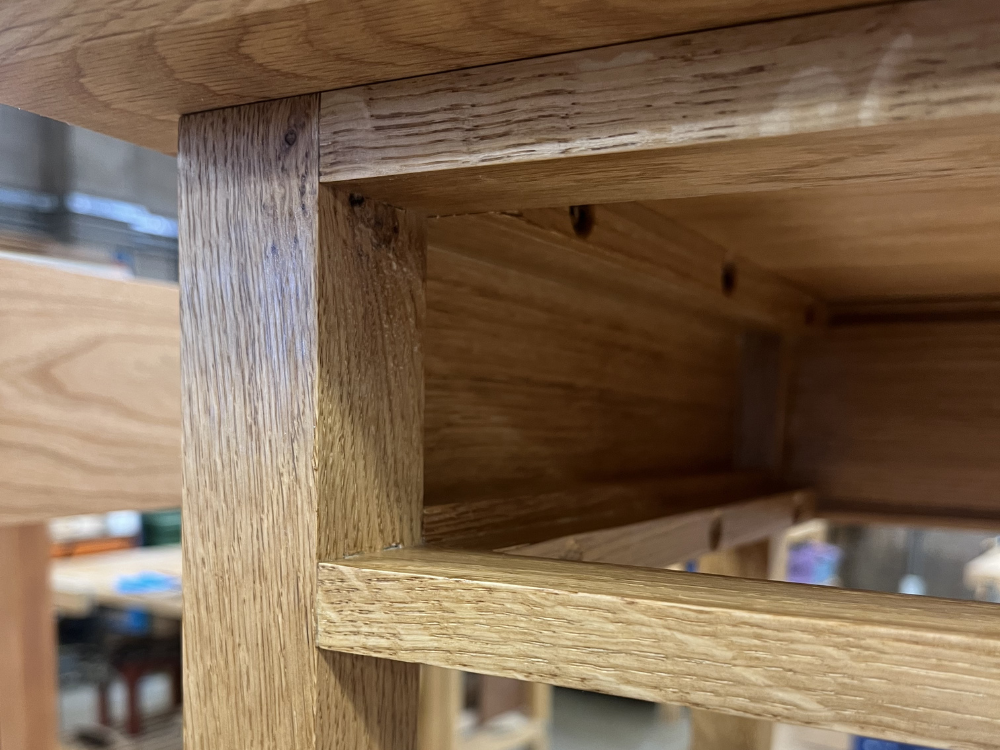
The frame is assembled using twin haunched mortise and tenon joints, providing strength and stability. The drawer is housed using twin tenons at the rear and a hand-cut lapped dovetail at the front, demonstrating a combination of machine and traditional hand-cut joinery.
The tabletop is secured to the frame with traditional wooden buttons that locate into grooves cut on the spindle moulder, allowing the timber to move naturally with seasonal changes. The drawer front was carefully fitted by hand to achieve an even, consistent reveal before being joined to the drawer box with hand-cut lapped dovetails.
The finished table was treated with five coats of Danish oil, enhancing the natural colour and grain of the oak while providing a durable, tactile finish.